
The Playground That Forgot About Summer
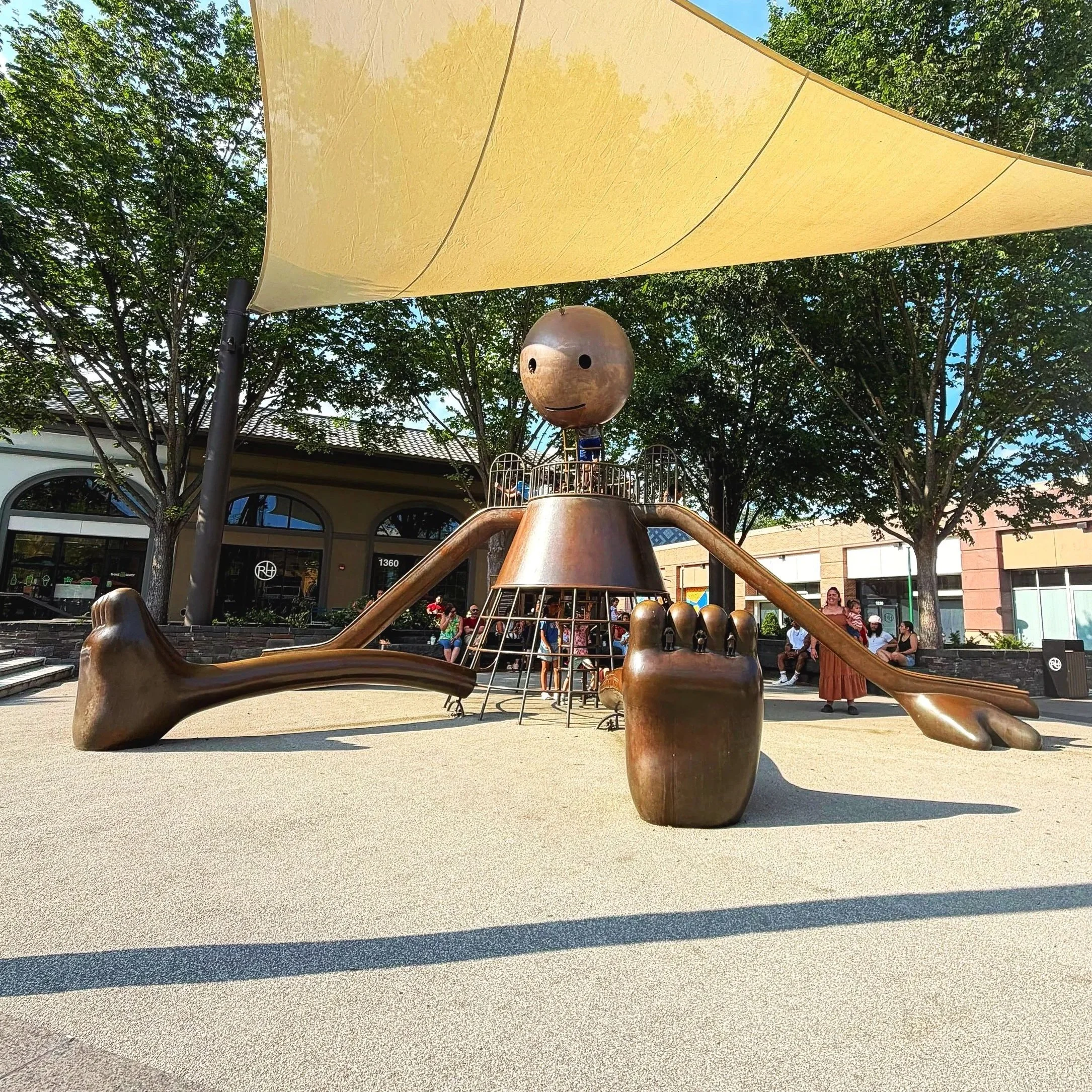
A child-like giant bronze public sculpture.
There were children everywhere—but not where the designers expected.
At first glance, the playground is unforgettable.
A giant bronze figure stretches across the plaza, its oversized limbs becoming slides, ladders, and climbing routes. It feels more like a piece of public sculpture than playground equipment, and that's precisely what makes it memorable. Unlike the brightly colored equipment we've come to expect, this feels restrained, timeless, and playful without relying on primary colors.
Then you begin watching the children.
That's when the real design reveals itself.
A Sculpture Worth Looking At
There is a remarkable amount of care in this piece.
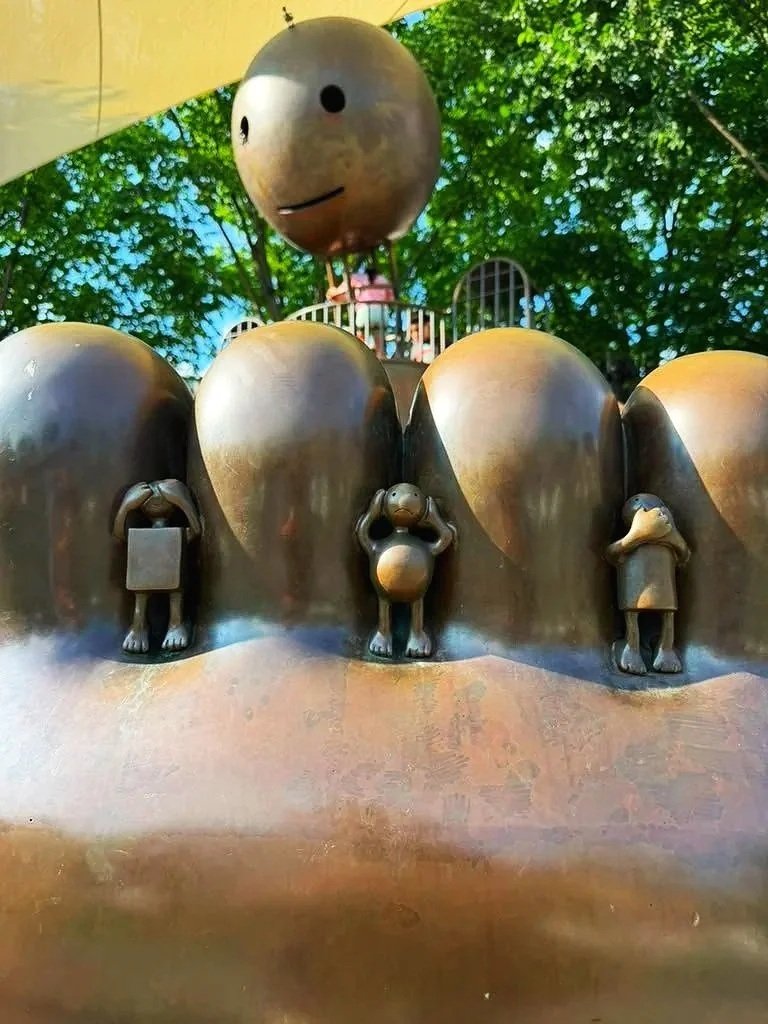
The proportions are charming. The bronze finish gives it permanence. Hidden are tiny sculpted figures—small discoveries that reward curiosity rather than demanding attention. They're delightful little secrets, the kind of detail children remember long after they leave.
The playground immediately establishes an identity for the shopping center around it. You don't need directions.
"Meet me at the giant person."
Good public art does exactly that.
The Playground Children Chose
What surprised us wasn't the sculpture. It was everything around it. The raised planting beds surrounding the trees slowly transformed into a second playground. Parents naturally sat along their edges while toddlers leaned over, digging through loose soil, collecting sticks, and building imaginary worlds beneath the trees. No signs encouraged this. No designer labeled it a play feature.
Yet it quickly became one of the busiest parts of the site. Children weren't simply using the playground. They were redesigning it. Sometimes the best play isn't where the equipment is. It's where imagination finds permission.
Toddlers Were Watching More Than Playing
The sculpture appears designed primarily for confident climbers.
There is essentially one way into the central body, and it quickly narrows into a space that comfortably accommodates only a few children at a time. As older kids occupied the interior, the structure naturally became something resembling a clubhouse.
Not intentionally exclusive. Just socially exclusive. For toddlers, there was almost nothing to participate in. They circled the sculpture. Looked up. Touched the bronze. Waited. Eventually, many wandered away in search of something that belonged to them. Ironically, they found it beneath the trees.
The Heat Nobody Designed For
The most beautiful slide in the park was also the least usable.
By mid-afternoon the bronze slides had absorbed enough heat that children avoided them almost entirely. A generous shade sail stretched overhead, but it protected much of the open plaza rather than the primary play surfaces.
This isn't simply a material issue. It's a reminder that outdoor spaces exist in time, not just in drawings. Architects routinely study daylight inside buildings. Landscape architects model decades of tree growth. Playgrounds deserve the same attention.
How does the space perform at three o'clock on a July afternoon?
For children, that answer matters more than almost anything else. Shade isn't decoration. It's part of the playground.
The Ground Deserves More Credit
One detail quietly exceeded expectations.
The poured-in-place safety surface had an unusual springiness that invited running. Children instinctively sprinted across it, barefoot and full speed, with a confidence that was impossible to miss.
It was comfortable, forgiving, and genuinely fun to move across.
Near the edges, however, the surface was beginning to deteriorate where it transitioned into adjacent materials—a small reminder that long-term performance often depends less on the material itself than on how two materials meet.
Even good ideas deserve thoughtful detailing.
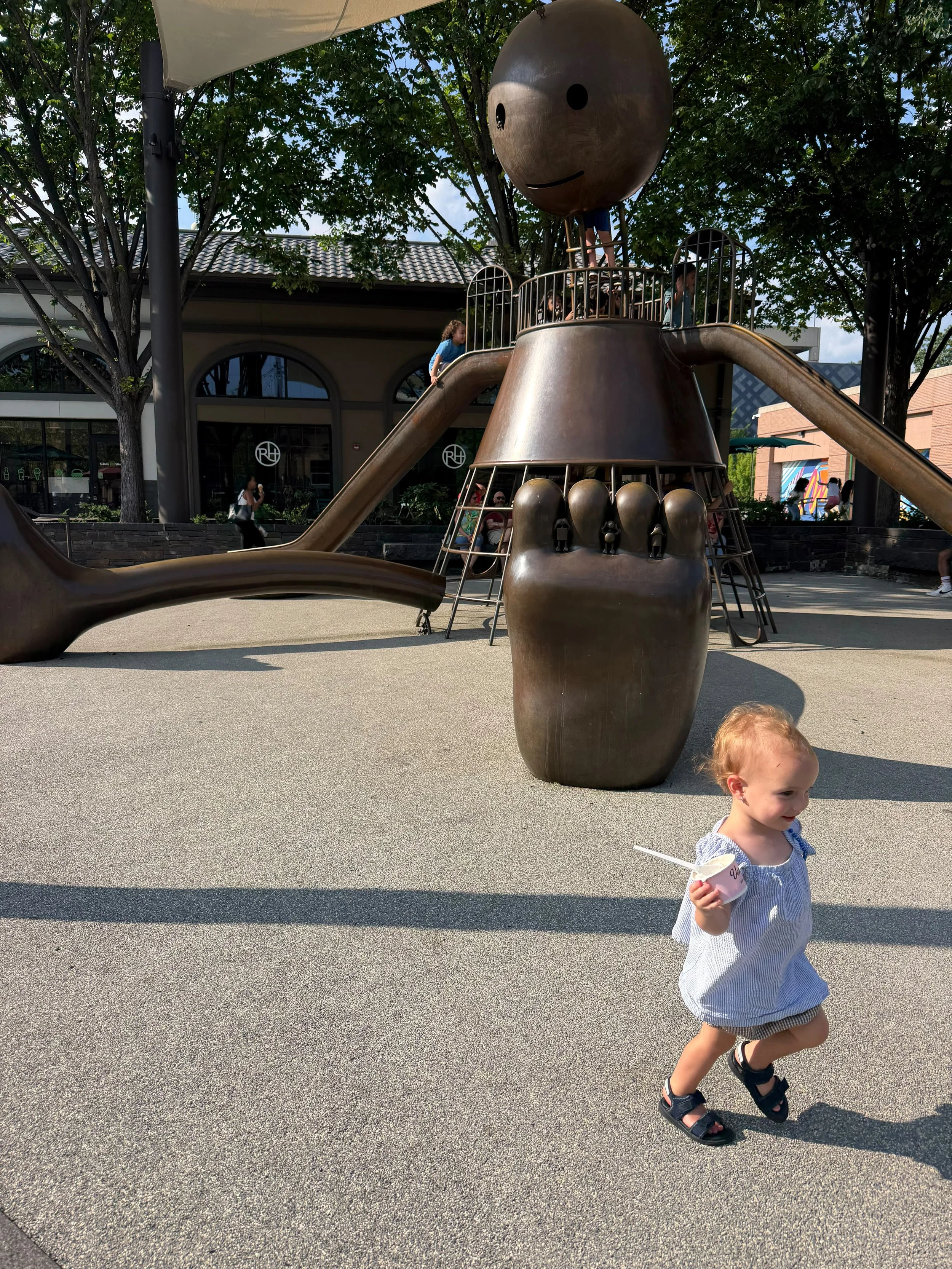
Children don't experience a playground as an object. They experience it as a place.
What We Wonder
Perhaps the most interesting question isn't whether this playground succeeded. It's whether it was designed for the audience that actually uses it.
Located in the middle of a shopping center, perhaps the intention was to create a memorable destination where older children could play while parents shopped nearby.
But shopping centers don't attract one kind of family. They attract everyone. Toddlers. Older siblings. Grandparents. Parents pushing strollers while carrying coffee. Designing for families means designing for every stage of childhood, not just the ones that climb the highest. Watching toddlers invent a completely different playground in the surrounding landscape makes us wonder how many opportunities exist in public space that are hiding in plain sight. Not because they were designed. Because children discovered them.
Field Note
Children are remarkably honest critics. They don't fill out surveys. They don't leave reviews. They simply go where the experience feels right. When children ignore the equipment and begin playing somewhere else, they're telling us something valuable. The most successful part of a playground isn't always the part that was designed to be one.
Sometimes, it's the place where imagination quietly takes over.
Closing Thought
People rarely use spaces exactly as they're designed. The best designers pay attention to where they go instead.